skip to Main Content

Ye Ha! NoMo WEMO!!

About 18 months ago I succumb to my impulsive side and purchased a Belkin WEMO LED Light Starter Kit. That kit included the WEMO interface and two of their Zigbee remote controlled light bulbs. Since I had “grand plans” I also ordered another six WEMO bulbs.

I must admit that I had my doubts about Belkin‘s WEMO offerings, but since the starter kit was just $25 at the time, I thought it worth a try. With just $120 invested in WEMO I sought to revisit remote controlled lights for my office, and perhaps elsewhere in the house.

Jumping ahead in time….I’m very pleased to report that I recently sold that collection of WEMO products to a neighbor, recouping about a quarter of my original investment!

Seriously, that WEMO lighting was some of the most infuriating tech to cross my path in recent years. I cannot believe that a big company would offer such a cheesy product.

Read More

Some Thoughts About Grandstream

In VUC625: The Good, The Bad & The Ugly I offered Grandstream as an example of a company going in a good direction. I didn’t start out feeling this way. This post describes my history with their products, and the evolution of my opinion about the company.

Voice: The Early Impression

grandstreamBT-101The very first Grandstream product I even held in my hands was the infamous BT-101. It was possibly the very first affordable SIP hard phone, which is why a friend bought one. Beyond merely affordable, it was cheap. Everything about it was cheap, which tainted my view of the company.
To be fair, there were a lot of really bad SIP desk phones at that time. Grandstream’s strategy was to own the entry level space, which they did, handily.

As a result of that initial experience with the BT-101, I actually bought a snom 200.

It wasn’t long before I was gifted (yes, gifted!) a Polycom Soundpoint IP600. That device won me over completely. It was superior in every way. It lived on my desk for years, not displaced until the Soundpoint IP650 brought HDVoice to my attention.

Read More

Netgear Routers Hailed as Dangerous – Here are some alternatives worth considering

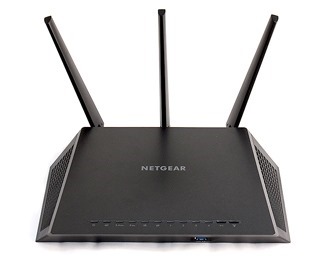
netgear-R7000CERT, a US Federal government agency tasked with cyber-security research, has issued an alert advising consumers to stop using various models of Netgear routers. These devices are subject to a trivially simple command injection exploit. Ars Technica has a nice overview of the matter.

Normally I’d have literally nothing to say about this, since it simply doesn’t impact us. Wanna know why it doesn’t impact us?

We don’t use a consumer router that runs closed source firmware.  We don’t think that you should either. In fact, you probably shouldn’t let your friends and family use that junk either.

Perhaps this holiday season, and all of the travelling & visiting that goes along with it, presents an opportunity to help someone unsuspecting secure their home network.

Read More

A Lament for the 3.5mm Mini Jack

It seems that Apple has pressed the world into abandoning one of the oldest standard connectors still in use, the 3.5mm mini-jack. Apple, Samsung and others are now offering mobile phones sans mini-jack, much to the delight of the Bluetooth…

Read More

Undecided: Replacing a Nexus 7 Tablet

Nexus-7-2013 360pxUntil very recently I was seriously committed to Google’s Nexus line of devices. From the Galaxy Nexus onward, with just one exception, I carried a Nexus Series mobile phone.

I was so happy with the Galaxy Nexus, and Nexus 4 after it, that I jumped on the first generation of the Nexus 7 tablet in 2012. Similarly, my experience with that tablet was good enough that I bought the Nexus 7 2013 edition immediately upon it’s launch.

Later, when Google stopped offering them, I even bought a spare! I regret not purchasing the HSPA+ capable version when I saw it offered by Expansys at a discount.

Read More

SOHO Tech: Power-Over-Ethernet is Awesome!

Over the years I’ve come to admire 802.3af standard power-over-Ethernet (aka P.O.E.), even for small- or home-office applications. What follows is an introduction to the topic, and some novel ideas about its use in possibly unexpected applications.

IEEE 802.3af Power-over-Ethernet is the industry standard approach to delivering DC power to network attached devices. Given a P.O.E.-capable switch, or a P.O.E. inserter, DC power is delivered over the same Ethernet connection that provides connectivity. Thus one wire is all that’s required to a distant device on the network.

Read More
Back To Top